VALUE ENGINEERING

An interactive value scenario, built with you.

An HCM, WFM or platform project is decided on what it delivers and what it really costs, taking into account the conditions needed for the expected gains to materialise.

In our engagements, Value Engineering is used to build, with you, costed scenarios and an ROI in which every assumption is visible. Options are tested during the working session, and their effect on the result appears immediately.

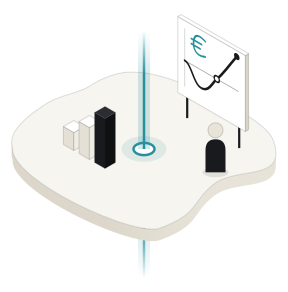
Value Engineering illustration: board with a value curve and a euro sign.

THE METHOD

Field experience as the starting point

Our orders of magnitude come from more than 20 years of projects, carried out successively on the client side, at ERP, HCM and WFM software vendors, and then on our own platforms, which we design and operate. This experience makes it possible to identify where the gains lie, estimate realistic levels and anticipate costs.

These benchmarks, supplemented by industry studies, form an initial version. The assumptions are then adjusted with the project team, expressed in the units the business actually uses, and documented with their source and the conditions under which they hold.

THE TOOL

An interactive simulator

The simulator recalculates the scenario with every change and instantly shows the result of varying the assumptions.

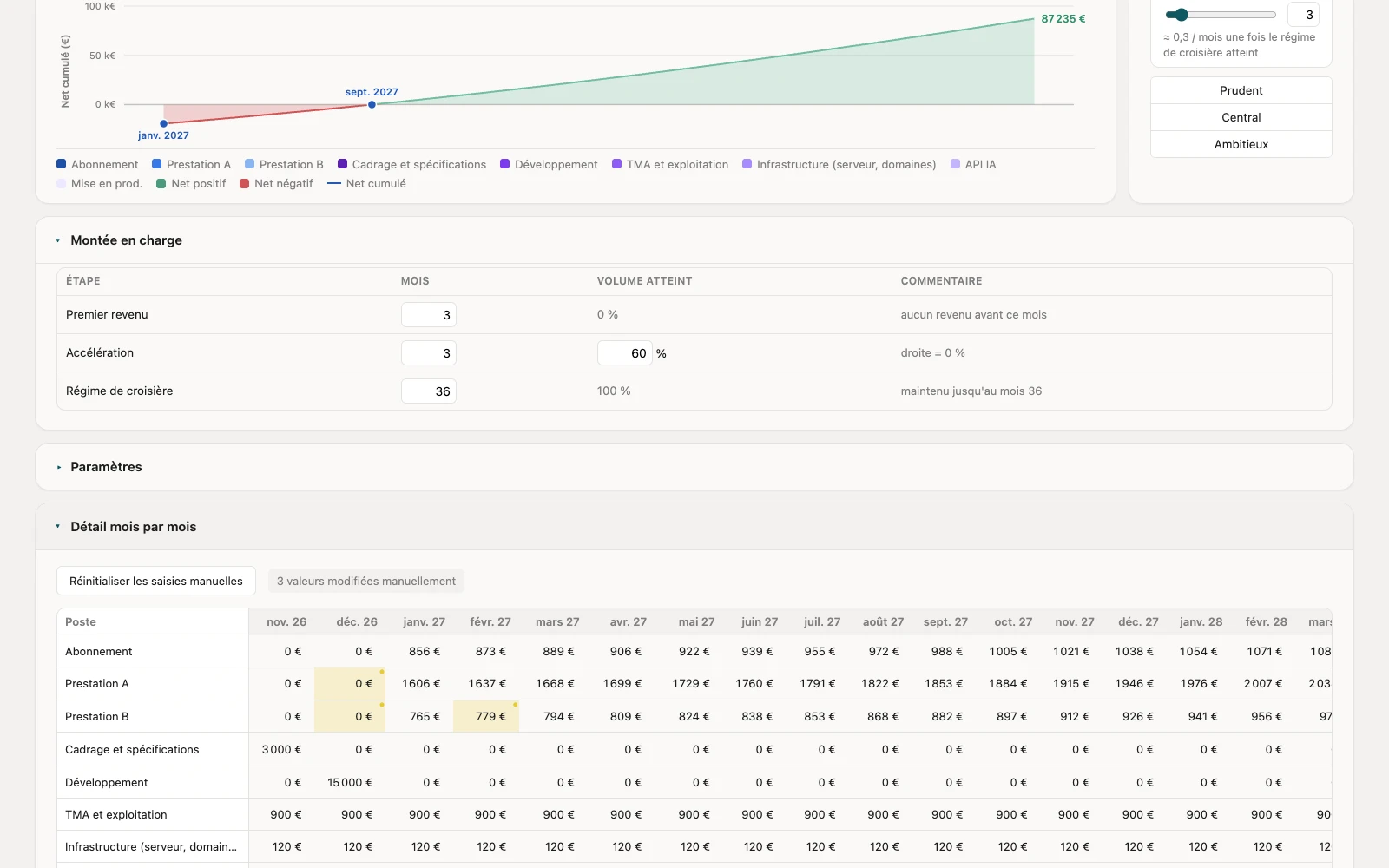
The ramp-up is built in stages: first gains or revenue, acceleration and steady state. Each point can be adjusted in timing and value, and results can be viewed by month, quarter or year from go-live. The monthly detail remains editable to account for specific situations.
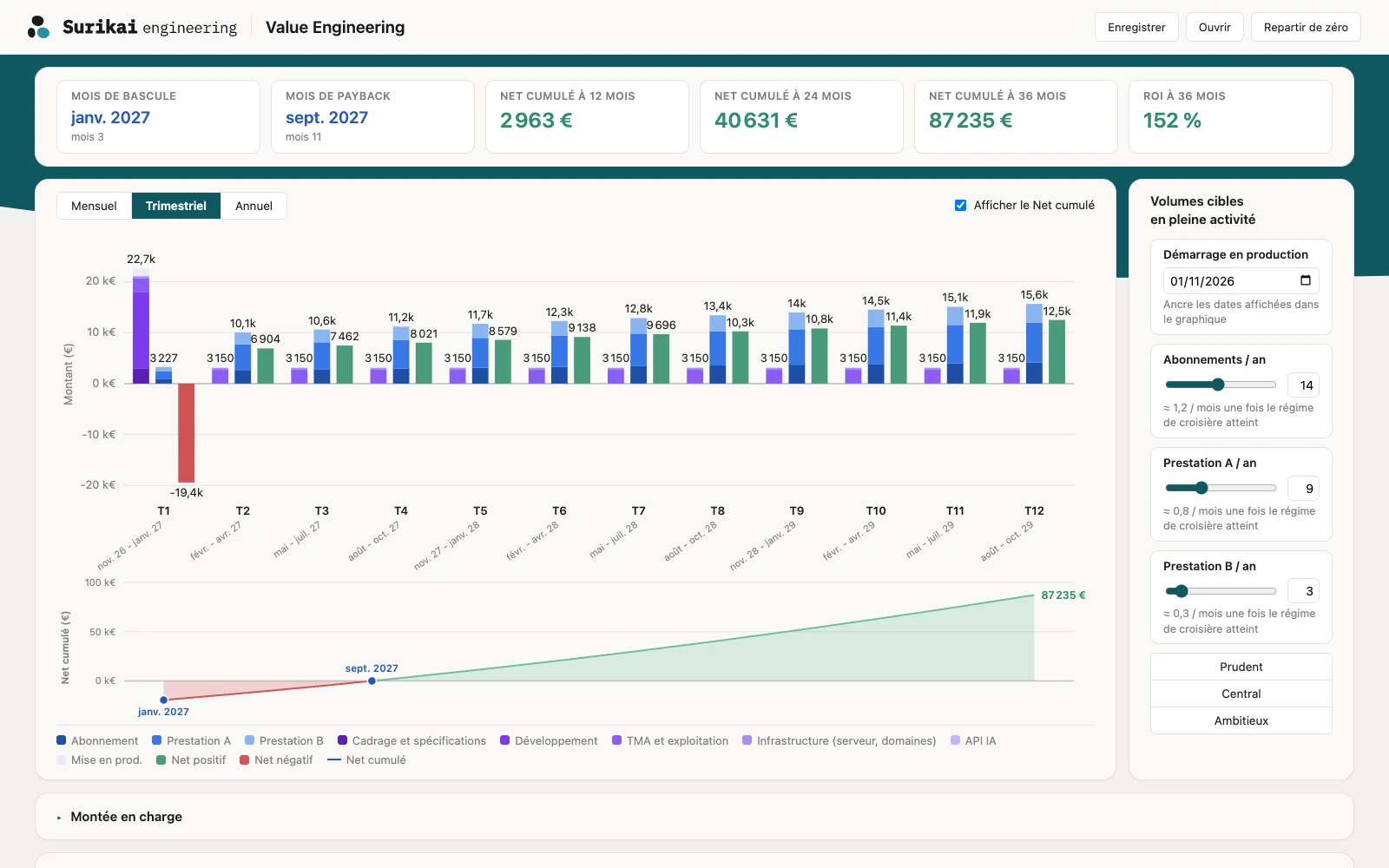
Modelling assumptions, results and cumulative net value.
Modelling assumptions, results and cumulative net value. (UI in French)Click to enlarge
Adjusting the ramp-up and detailed values.
Adjusting the ramp-up parameters and detailed values. (UI in French)Click to enlarge

THE OUTCOME

A business case to support the decision

The business case brings together gains, costs and risks to compare options, set the scope and prepare an investment decision.

  • The value of each option

    Each feature or change under consideration is assessed on its cost, the gains it brings and the risks it helps reduce. The model helps set priorities, defer less profitable functions and arbitrate requests that arise during the project.

  • Full cost over several years

    Investment, integration, operations, maintenance, hosting and AI service consumption: all costs are accounted for over the period studied. The model makes it possible to compare an off-the-shelf solution with custom development.

  • The timing of gains

    The model distinguishes the ramp-up, the point at which monthly gains cover recurring costs and the point at which the investment is paid back. These markers help organise the roll-out and identify the quick wins.

  • Scenarios to test the assumptions

    Cautious, central and ambitious scenarios measure the effect of the assumptions on gains, costs and adoption. A slower ramp-up or an additional cost can be assessed in this way.

The business case keeps the baseline, the assumptions used, their sources and their limits. It remains reusable for new trade-offs and, after launch, for comparing actual results with expected gains.

Let’s discuss your project

Assumptions to test before you invest?

A first conversation often brings out the variables that matter for your decision.

Discuss your project